
- Home
- Solar guides
- Cost of Solar Panels in Ireland 2026: Full Price Breakdown for Homeowners
Cost of Solar Panels in Ireland 2026: Full Price Breakdown for Homeowners
Solar panel prices in Ireland have fallen significantly over the past decade. This guide gives you the real 2026 numbers — total installed costs by system size, grant deductions, what each component costs, and how to avoid paying over the odds.
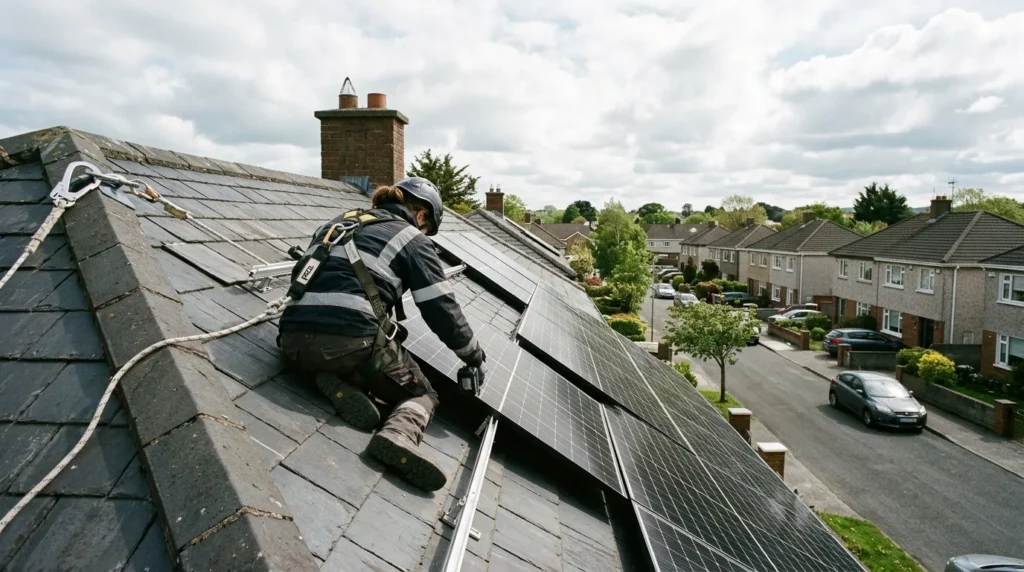
The cost of solar panels in Ireland in 2026 reflects a market that has matured significantly. Irish homeowners are getting far better value than they were five or even three years ago — but prices vary considerably depending on system size, panel brand, inverter choice, roof complexity, and installer margin.
This guide gives you the real numbers: what a complete solar PV installation costs in 2026, what the components contribute, how the SEAI grant changes your net investment, and the red flags that indicate an overpriced quote.
2026 Installed System Costs at a Glance
Total installed costs (supply + installation + VAT + grid connection) for a standard south-facing residential system:
System Size
Typical Range
Average
After €1,800 SEAI Grant
2 kWp
€4,500–€6,500
€5,500
€3,700
3 kWp
€6,500–€8,500
€7,500
€5,700
4 kWp
€8,500–€11,500
€10,000
€8,200
5 kWp
€10,500–€13,500
€12,000
€10,200
6 kWp
€12,000–€16,000
€14,000
€12,200
8 kWp
€15,000–€20,000
€17,500
€15,700
10 kWp
€18,000–€25,000
€21,000
€19,200
Note: The SEAI grant maximum is €1,800 for all systems 2 kWp and above (2026 rate: €900/kWp × 2 kWp = €1,800 max). A 6 kWp system gets the same €1,800 grant as a 4 kWp system.
VAT: Residential solar PV installations are zero-rated for VAT in Ireland since the 2023 Finance Act change — a saving of 23% on components that was previously passed to consumers. This zero-rating is reflected in all current installer quotes.
Cost Breakdown by Component
For a 4 kWp system (10 × 400 W panels, Fronius or SolarEdge inverter, standard mounting):
Component
Cost Range
% of Total
Solar panels (10 × 400 W mono)
€1,800–€2,600
18–25%
Inverter (string or micro)
€800–€2,500
8–22%
Mounting system (rails, hooks)
€500–€900
5–8%
DC/AC cabling
€300–€600
3–5%
Generation meter
€100–€200
1–2%
Isolators, SPD, safety equipment
€200–€400
2–4%
Labour (installation)
€1,500–€3,000
15–27%
Scaffolding
€300–€800
3–7%
SEAI application support
€0–€200
0–2%
Installer overhead + margin
€1,000–€2,500
10–22%
Total
€6,500–€13,500
100%
The wide ranges reflect significant variation in:
- Panel brand (Jinko vs REC Alpha: ~€400 difference per system)
- Inverter type (string vs microinverter: €800–€1,200 difference)
- Labour market (Dublin installers often charge 15–25% more than rural installers)
- Installer margin (industry ranges from 15–35% gross margin)
What Drives Price Variation Between Quotes?
When you get three quotes for the same system size and find prices ranging from €9,000 to €13,000, the differences typically reflect:
1. Panel brand and tier Entry-level panels (Tier 2 brands, older PERC technology) cost less than premium brands (REC Alpha TOPCon, Panasonic HJT). A system specifying Jinko Tiger Neo (excellent value) might cost €800–€1,500 less than the same system with REC Alpha — while performing only marginally differently over a full 25-year period.
2. Inverter choice A standard Fronius Primo string inverter costs €700–€900. Add SolarEdge with optimisers on every panel and the inverter sub-system alone costs €2,000–€3,500 for a 4 kWp system. Microinverter systems (Enphase IQ8) cost €1,800–€2,800 for the inverter component. These are real costs associated with real benefits — don’t buy the cheapest option without understanding what you’re giving up.
3. Labour and overheads Dublin and major cities have higher labour and overhead costs than rural counties. Expect to pay 10–20% more for the same physical system in Dublin 4 versus County Roscommon.
4. Company size and overhead Large installer chains with significant marketing budgets, showrooms, and call centres typically charge 15–25% more than smaller, independently owned solar companies. Both can be excellent — the key is SEAI registration and verifiable references.
5. Shading mitigation If your roof needs power optimisers, the cost increases by €100–€200 per panel fitted. A 10-panel system with optimisers on all panels adds €1,000–€2,000 to the base price.
Regional Price Variations
This reflects labour costs, travel time, and installer competition intensity.
Region
Price Relative to National Average
Dublin
+10–20%
Cork, Limerick, Galway cities
+5–10%
Suburban counties (Kildare, Meath, Wicklow)
+5%
Rural Munster, Leinster
Average
Rural Connacht, Ulster border
-5 to -10%
Battery Storage Costs
Adding battery storage to your solar installation in 2026:
Battery Size
Typical Battery Cost Added
Total System Cost (4 kWp + battery)
5 kWh
€2,500–€4,000
€11,000–€15,500 before grant
10 kWh
€4,000–€6,500
€12,500–€18,000 before grant
15 kWh
€6,000–€9,500
€14,500–€21,000 before grant
There is currently no SEAI grant for home battery storage (only the solar panels themselves). Battery costs are expected to continue falling — lithium iron phosphate (LFP) batteries have dropped ~40% in price since 2022.
Immersion Diverter Cost
A myenergi Eddi, Solar iBoost, or Solic 200 immersion diverter adds approximately €300–€600 supplied and fitted. This is one of the best-value additions to any Irish solar system, as it redirects midday surplus to free hot water.
Smart EV Charger Cost
Pairing solar with an EV charger lets you charge your car from surplus solar electricity. A smart solar-integrated charger (myenergi Zappi, Ohme, or Wallbox Pulsar Plus) costs €600–€1,200 installed. The Zappi is specifically designed to work with solar surplus and is particularly popular with Irish solar customers.
How to Tell If You're Overpaying
Red flags in a solar quote:
- All-in price above €3,000 per kWp for a standard 4 kWp system (over €12,000 for 4 kWp)
- Panels specified by watts only — no brand or model number provided
- No inverter brand or model specified
- No separate line items — just a single total figure
- “We’ll handle the grant for you” as a reason to pay a premium price (One Stop Shop service should be cost-neutral or save you money)
- Pressure to sign quickly for a “limited offer”
Green flags:
- Detailed itemised quote showing panels, inverter, mounting, labour separately
- Specific panel model with efficiency and warranty details
- Clear roof layout plan showing exact panel placement
- Production estimate from modelling software (PVsyst or similar)
- Three recent local references you can actually contact
- SEAI registration number prominently stated
See our solar quote negotiation checklist for a complete list of what to check before signing.
The True Net Cost: After Grant and Financing
For a 4 kWp system at €10,000:
- SEAI grant: -€1,800
- Net out-of-pocket: €8,200
If financed over 5 years at 5.5% APR (SEAI Green Loan, Credit Union Green Loan):
- Monthly repayment: ~€157/month
- Total interest: ~€1,200
- Total cost including finance: €9,400
Annual financial benefit (bill savings + exports): €1,000–€1,400 This means the system pays for itself in 6–9 years, then generates pure savings for 20+ more years. See our full payback period calculation guide.
Get 3 free, no-obligation solar quotes
Tell us a few quick details about your home and we’ll connect you with up to 3 SEAI-registered solar installers in your area.
Frequently Asked Questions
How much do solar panels cost in Ireland in 2026?
Is VAT charged on solar panels in Ireland?
Why do solar panel quotes vary so much between installers?
Is it cheaper to install solar in rural Ireland?
Can I get finance for solar panels in Ireland?
Get 3 free quotes for your home EV charger
We'll match you with Safe Electric-certified installers who can apply for the €300 SEAI Home Charger Grant on your behalf.
- No obligation · Free · Takes 2 minutes
More solar pv guides

Sources & further reading
— Sustainable Energy Authority of Ireland
— Revenue Commissioners Ireland
— Department of the Environment, Climate and Communications

Solar Expert Editorial
Solar advisor team
Published 15 May 2026
Get 3 free quotes for your home EV charger
We'll match you with Safe Electric-certified installers who can apply for the €300 SEAI Home Charger Grant on your behalf.
- No obligation · Free · Takes 2 minutes